
Osage Memory and Public Remembrance
Killers of the Flower MoonThis flow follows the movement from community grief to cultural preservation and renewed public recognition of the Reign of Terror.
increasing Bearing strength in each event
 decreasing
Bearing strength in each eventdecreasingMourning the Dead
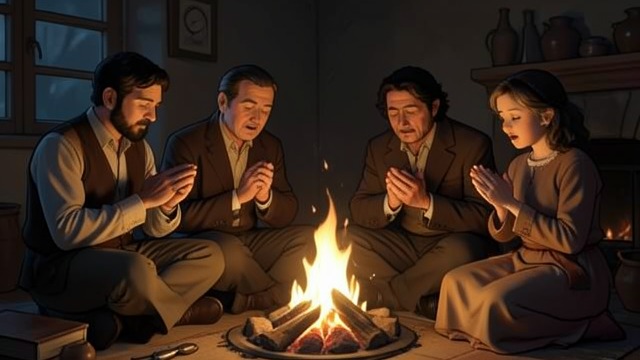
Mourning the Dead
Ritual and Loss
Osage families combine prayer-songs, Catholic rites, and burial customs as they mourn those killed. The rituals preserve relationships to the dead even when violence has disrupted ordinary life.
Fear Enters Daily Life
Families illuminate their homes at night and wonder who will be next. Mourning becomes inseparable from the effort to stay alive.
A Tribe Preserves Its Past
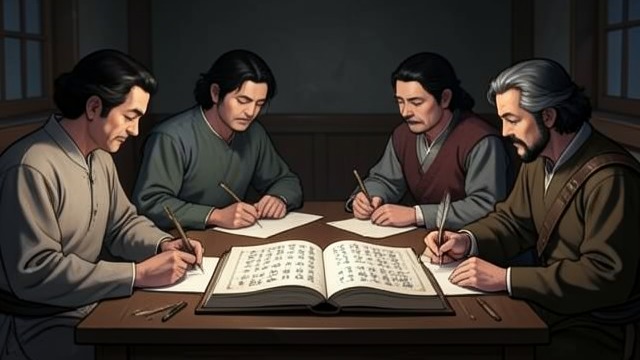
A Tribe Preserves Its Past
Histories and Traditions
Osage writers and historians document cultural practices and the history of dispossession. Their work keeps knowledge available even as language and customs face pressure.
Survival as Active Work
The community does not emerge unchanged from the violence, but it gathers what remains. Cultural survival becomes a deliberate act of care and transmission.
A Photograph Altered
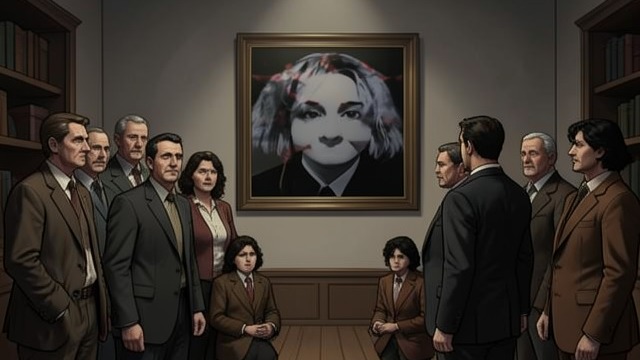
A Photograph Altered
The Missing Section
A panoramic image of a 1924 ceremony has a portion removed. Kathryn Red Corn explains that the missing panel showed William K. Hale.
Refusal to Forget
The removal is not an effort to erase the crimes but a community’s response to a figure whose presence remains painful. The photograph makes memory visible through absence.
Anna’s Remains Returned
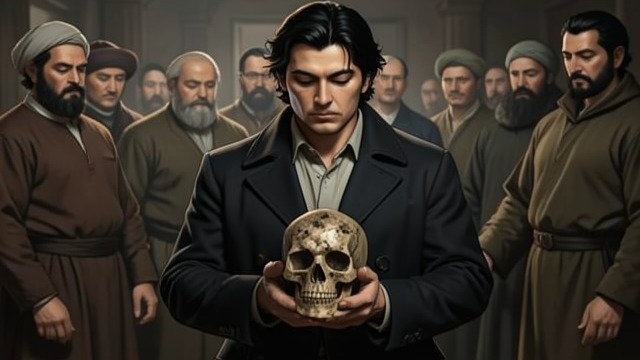
Anna’s Remains Returned
A Skull Kept Outside the Grave
A man tells Red Corn that he has Anna Brown’s skull, once retained for investigative examination. The family and museum director insist that the remains belong with the Osage.
Burial Restored
The skull is retrieved and buried in a quiet ceremony with Anna’s other remains. The act answers a long-standing indignity by returning her body to her community.
The Dances Carry Memory
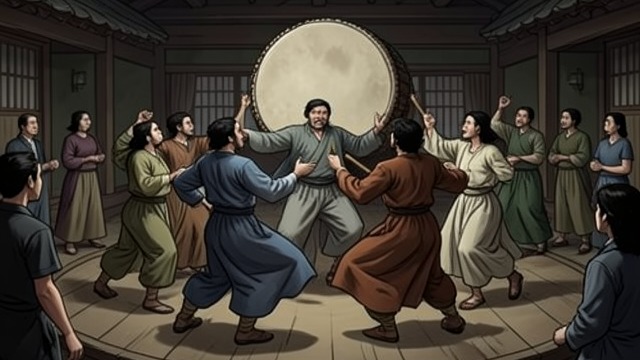
The Dances Carry Memory
A Living Ceremony
The I’n-Lon-Schka dances bring Osage families together in Gray Horse, Pawhuska, and Hominy. Music and movement connect contemporary life with traditions rooted in the community’s past.
History in the Present
Mollie’s descendants attend the dances and tell family stories. The gathering shows that the Reign of Terror is remembered within a living nation, not only in archives or court records.
1921 to 1923
Twentieth century
At the Osage Nation Museum in 2012
Years before 2012
June 2012 to 2013
